How to Choose the Right Contact Lens Case for Your Needs?
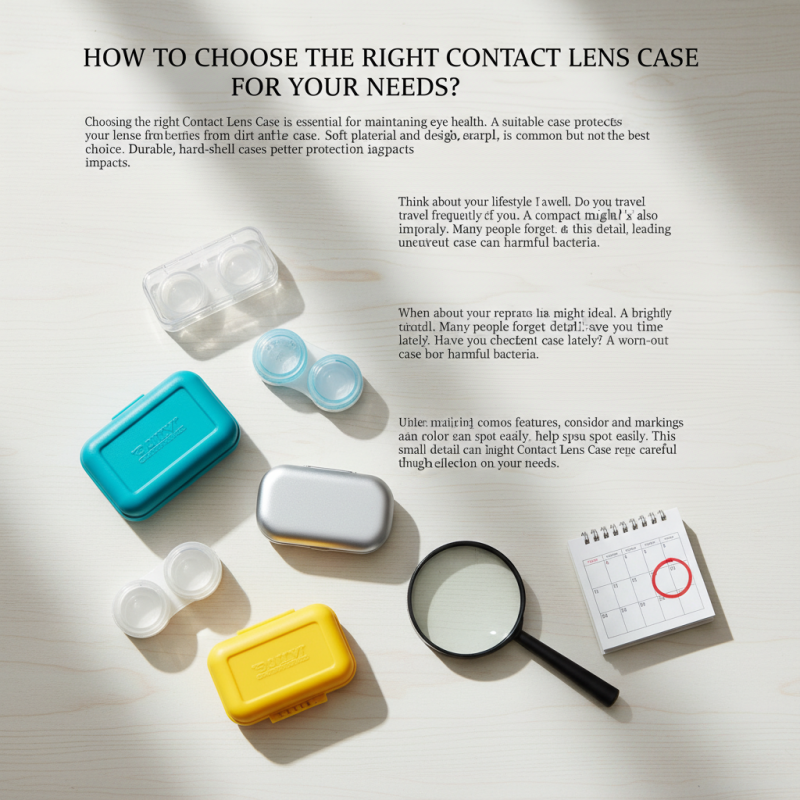
Choosing the right Contact Lens Case is essential for maintaining eye health. A suitable case protects your lenses from dirt and bacteria. Consider the material and design of the case. Soft plastic, for example, is common but not always the best choice. Durable, hard-shell cases provide better protection against impacts.
Think about your lifestyle as well. Do you travel frequently? A compact case might be ideal for you. It's also important to replace your case regularly. Many people forget this detail, leading to unnecessary risks. Have you checked your current case lately? A worn-out case can harbor harmful bacteria.
When it comes to features, consider the color and markings. A brightly colored case can help you spot it easily. This small detail can save you time and frustration. Ultimately, finding the right Contact Lens Case requires careful thought and reflection on your needs.
Understanding Different Types of Contact Lens Cases Available
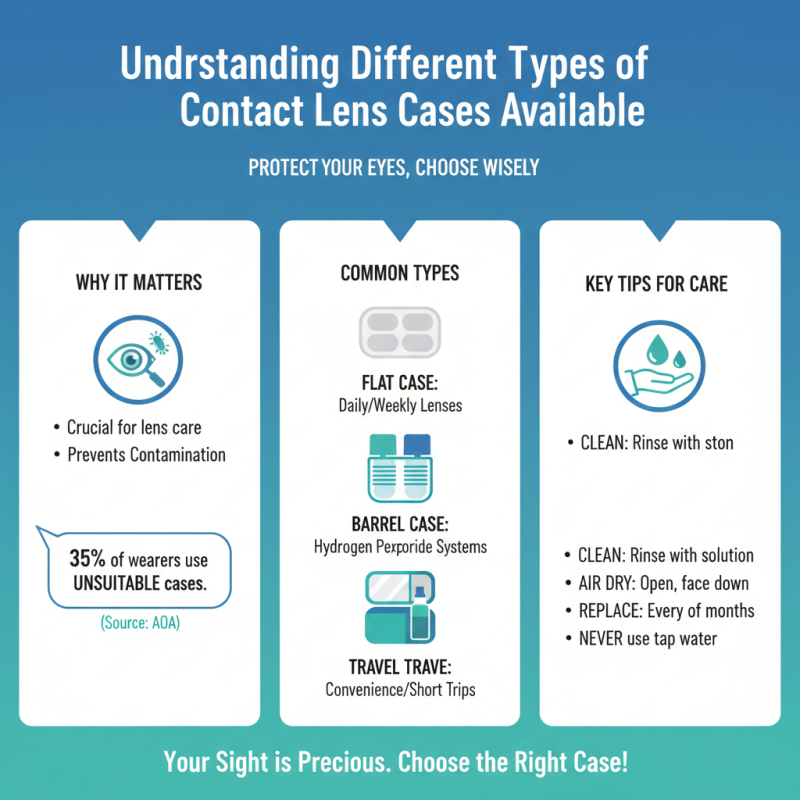
Choosing the right contact lens case is crucial for lens care. Many options exist, and understanding them is key. A report by the American Optometric Association states that nearly 35% of lens wearers use cases that are not suitable. This mishap can lead to contamination.
There are basic types of contact lens cases. Classic hard cases offer protection but can be cumbersome. Soft cases are lightweight and often more portable. However, they may not provide the same level of protection. Research shows that cases made of durable materials reduce bacterial growth by up to 40%. This statistic is vital when considering lens safety.
Moreover, some cases include a built-in cleaning mechanism. For instance, UV-lit cases can help disinfect lenses. Yet, they tend to be more expensive. Users often overlook how frequently cases should be replaced. Experts suggest changing the case every three months. Ignoring this can lead to eye infections. It’s a reminder that prioritizing lens hygiene impacts overall eye health significantly.
Key Features to Consider When Choosing a Contact Lens Case
Choosing the right contact lens case is crucial for maintaining eye health. A study published in the *Journal of Optometry* indicates that about 40% of contact lens users do not clean their cases properly. This negligence can lead to contamination and infections. Selecting a case made from antimicrobial materials can significantly reduce this risk. Look for cases designed with features to keep lenses safe and clean.
Size matters too. Not all cases fit all lenses perfectly. A snug fit prevents movement and potential damage. Consider a case with a secure closure; it's essential. Statistics show that about 30% of users have experienced lens spoilage due to poor case design. Inspect the construction; some cases might look appealing but may not protect as intended.
Additionally, think about portability. Many people travel frequently, and a compact case can be a lifesaver. Yet, an overly small case might compromise safety. Striking a balance is vital. Some users prefer dual compartments for different lenses. However, this choice can sometimes confuse, leading to mixing lenses. Reflecting on your specific needs will guide you toward the perfect choice.
How to Choose the Right Contact Lens Case for Your Needs?
| Feature |
Description |
Importance |
| Material |
Common materials include plastic or silicone. Choose durable and easy-to-clean materials. |
High |
| Design |
Look for design features like screw-on lids or flip-top cases for easier access. |
Medium |
| Portability |
Compact cases are more convenient for travel or daily use. |
High |
| Sterility |
Choose cases that offer UV sterilization or are easy to disinfect. |
Very High |
| Size |
Make sure the case fits your specific lens size (soft or hard lenses). |
High |
| Price |
Consider budget options but prioritize quality for safety. |
Medium |
Assessing Material and Durability for Longevity of Use
When selecting a contact lens case, the material and durability are critical factors. A case made from high-quality plastic will likely last longer than a flimsy option. Many users overlook this aspect. A resilient case can withstand daily wear and tear. Glass options can provide added robustness, but they may be heavier and less portable.
Different materials offer varying levels of protection. For example, silicone cases offer flexibility and shock resistance. They can absorb impacts if dropped. On the other hand, hard plastic cases are usually better at keeping moisture controlled. It's essential to consider how you’ll use the case. If you travel often, durability is key.
Sometimes, users pick cases based on aesthetics rather than functionality. A trendy design can quickly fade, but a sturdy build is a long-term investment. Reflect on your needs before choosing. Longevity matters, especially when it comes to protecting your lenses. Finding the right balance between style and durability can lead to better experiences.
Importance of Sterilization and Hygiene in Lens Case Selection
Choosing a contact lens case may seem simple, yet hygiene is crucial. A clean lens case prevents infections. When selecting a case, consider sterilization options. Look for cases that promote easy cleaning. Materials like silicone are often easier to disinfect. Try to avoid cases with intricate designs. These may trap bacteria.
Remember, it's not just about the case. Regular cleaning habits matter too. Rinse your case daily with solution, not water. Replace your case every three months to maintain hygiene. Some people forget this rule. They hold onto cases longer than they should. This negligence can lead to serious eye problems.
In the end, take the time to select a case that suits your needs. Prioritize hygiene over style. A small investment in a good-quality case can save you from discomfort. Reflect on your habits and make necessary changes. Your eyes will thank you for it.
Choosing a Portable Contact Lens Case for Travel Needs
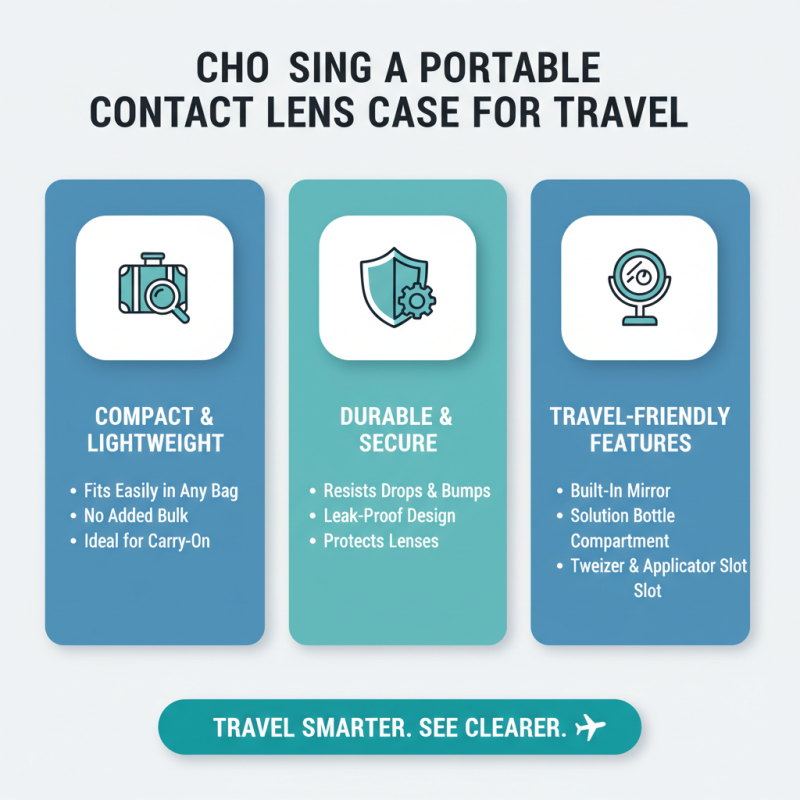
Traveling with contact lenses can be a challenge. A good portable contact lens case makes all the difference. Look for a lightweight, compact design that fits easily in your bag. It should be durable to withstand travel wear and tear. Often, travel cases come with additional features. Some include a mirror for on-the-go applications.
When selecting a case, check the size. It needs to hold enough solution without being bulky. A leak-proof design is essential. You certainly don’t want your solution spilling inside your luggage. Opt for bright colors or patterns to easily spot it among your belongings.
However, portability might come at a price. Some travel cases don’t offer enough protection for your lenses. Reflect on how often you travel. If it's frequent, investing in a high-quality case is wise. But for occasional trips, a basic case may suffice. Remember to always carry extra solution. It’s a small detail, but one that prevents headaches later.