Why Choose Glass Cleaner Spray for Global Buyers?

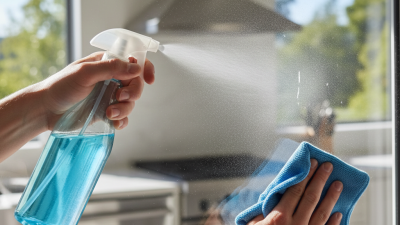
For global buyers, choosing a cleaning product involves more than comparing prices. Glass Cleaner Spray offers a practical way to remove fingerprints, dust, and light water marks from windows, mirrors, display cases, and vehicle glass. Its trigger bottle supports controlled application, while a fine mist can cover broad surfaces without excessive liquid. In real purchasing work, these details affect labor, storage, and customer satisfaction. A clear view matters. Still, performance depends on formulation, surface condition, and correct use.

Reliable sourcing begins with evidence. Buyers should request safety documents, batch information, shelf-life guidance, and test results from the supplier. They should also confirm spray pattern, drying time, residue levels, bottle strength, and compatibility with coated or tinted glass. A product that works well on a showroom mirror may behave differently on a treated screen. Small trials reveal this difference. No product is perfect. A careful importer should test samples under local temperature, humidity, and transport conditions before placing a large order. Packaging also deserves attention. Leak-resistant closures, readable labels, and strong cartons can reduce damage during long-distance shipping.

A professional Glass Cleaner Spray supplier should communicate consistently and answer technical questions clearly. Verified factory information, transparent quality controls, and responsive after-sales support help buyers assess credibility. Claims such as “streak-free” should be supported by practical testing, not attractive wording alone. Buyers must review destination-market labeling, chemical rules, and recycling expectations with qualified local advisers. Requirements vary. This guide examines product performance, packaging, documentation, and supplier reliability for informed global decisions. The goal is not to promote one formula. It is to help buyers choose evidence over assumptions and value over the lowest quoted price.
Why Choose Glass Cleaner Spray for Global Buyers?

Global Glass-Cleaner Demand: 2024 Market Data and Buyer Drivers

Why Choose Glass Cleaner Spray for Global Buyers?

Global glass-cleaner demand is growing within the wider household-cleaning sector. Grand View Research valued the global household cleaners market at approximately USD 39.4 billion in 2023. Its 2024 outlook also indicates continued expansion through 2030. Glass cleaner remains a smaller category, but buyers notice its frequent use on windows, mirrors, shower screens, and vehicle glass.

The category is not perfectly measured. Published reports use different product definitions. Mordor Intelligence and IMARC both identify convenience, hygiene awareness, and urban households as important market drivers in 2024. Spray formats reduce measuring time and improve coverage on large surfaces. That matters in hotels, offices, supermarkets, and homes.

Small details influence purchasing decisions.

Importers often assess spray consistency, drying speed, scent strength, and visible streaks. They also review bottle durability, trigger performance, carton efficiency, and leakage rates during transport. Sustainable packaging is gaining attention, although environmental claims require evidence. A refill pouch may reduce plastic use, but its practical value depends on local recycling systems.

Professional buyers also request safety data sheets, ingredient disclosure, batch traceability, and multilingual labels. These documents support responsible sourcing and smoother customs review. The right formula should perform under different water conditions and temperatures. A product that works well in one climate may leave residue elsewhere. That risk is easy to underestimate. Data reports show market direction, but hands-on testing remains essential before committing to large orders.

Formula Performance: Surfactants, Solvents, and pH 7–10 Cleaning Action

Glass cleaner spray suits global buyers because its formula can balance speed, clarity, and surface safety. Surfactants reduce water tension. They help the spray spread across glass evenly. This action lifts fingerprints, dust, and light grease. Solvents then loosen oily films and evaporate quickly. The result is fewer streaks on mirrors, windows, and display panels.

A pH between 7 and 10 usually supports practical cleaning without excessive alkalinity. Near-neutral formulas may suit coated glass and frequent household use. Mildly alkaline formulas can remove heavier fingerprints more effectively. However, higher pH is not automatically better. It may affect sensitive coatings or leave residue when overdosed. The U.S. EPA Safer Choice Standard stresses ingredient safety and performance evaluation. Buyers should request stability, residue, and material-compatibility test results. Grand View Research’s 2024 household cleaners market report estimates continued market growth through 2030. That growth increases pressure for reliable, transparent formulation claims.

Tips: Test the spray on a small corner first. Check the label’s pH range. Spray the cloth, not the whole surface, in warm conditions. A clean microfiber cloth often matters more than extra solvent. Some formulas still streak. Humidity, water hardness, and wiping technique can explain the difference.

Why Choose Glass Cleaner Spray for Global Buyers? - Formula Performance: Surfactants, Solvents, and pH 7–10 Cleaning Action
Formula Dimension Typical Technical Range Cleaning Function Performance Indicator Global Buyer Consideration
Product pH pH 7.0–10.0 Neutral to mildly alkaline formulas help remove fingerprints, light grease, dust, and general household soil without relying on highly corrosive acidity or alkalinity. Cleaning strength, material compatibility, and user comfort should be evaluated together; pH alone does not determine total cleaning performance. Suitable pH selection can support wider use on glass and many hard, non-porous surfaces. Local labeling and safety requirements still apply.
Nonionic Surfactants Approximately 0.05–0.50% active matter Lower interfacial tension so the liquid spreads across glass, lifts oily soil, and helps keep loosened particles suspended during wiping. Even wetting, reduced smearing, and improved removal of fingerprints and light oily residues. Low-residue, low-foam grades are generally preferred for spray-and-wipe glass applications.
Anionic Surfactants Approximately 0.02–0.30% active matter Provides detergency and soil removal, especially when combined with compatible nonionic surfactants. Can improve soil lifting, but excessive use may increase foam, streaking, or rinse demand. Buyers should request foam and residue testing for trigger-spray formats and high-visibility glass.
Water-Miscible Solvents Approximately 1–10% w/w Helps dissolve fingerprints, cosmetic residues, light oils, and other organic soils that water and surfactants alone may not remove efficiently. Faster soil dissolution, quicker drying, and reduced wiping effort when the solvent level is properly balanced. Solvent choice affects odor, flammability classification, packaging compatibility, and transport requirements.
Alcohol-Type Solvents Commonly 1–8% w/w in ready-to-use products Supports rapid evaporation and helps reduce visible water marks after wiping. Shorter drying time and a cleaner finish, subject to room temperature, humidity, and spray dosage. Check regional VOC rules, flammability labeling, worker exposure limits, and compatibility with seals or coated surfaces.
Chelating Agents Approximately 0.05–0.50% w/w Binds trace metal ions in hard water and helps reduce mineral-related spotting or interference with surfactant performance. More consistent cleaning in areas with moderately hard water and improved formula stability. Biodegradability, wastewater regulations, and the selected chelator should be reviewed for each target market.
Builders or Alkalinity Adjusters Usually below 2% w/w Adjusts alkalinity and supports removal of fatty or oily soil while maintaining the intended pH range. Higher alkalinity may improve grease cutting but can increase the risk of dulling, irritation, or incompatibility with sensitive finishes. For broad international use, mild alkalinity is often easier to position than highly alkaline alternatives.
Water Content Typically 85–98% w/w Acts as the primary carrier for surfactants, solvents, pH adjusters, and other functional ingredients. Controls sprayability, drying behavior, viscosity, and the amount of active material delivered per trigger stroke. Water quality matters: demineralized or suitably treated water can reduce haze, scale, and batch-to-batch variation.
Viscosity Usually close to water; approximately 1–10 mPa·s at 20–25°C Supports a fine, uniform trigger spray and rapid surface coverage without excessive dripping. Consistent spray pattern, easy wiping, and reliable dosing across different trigger mechanisms. Packaging trials should be performed with the actual bottle, dip tube, trigger, and closure system.
Drying and Residue Profile Target: low visible residue after one normal wipe Balances surfactant, solvent, water, and additive levels to minimize streaks, haze, and tacky deposits. Uniform clarity under angled light, low lint attraction, and limited repeat wiping. Testing should include different cloth types, spray quantities, temperatures, humidity levels, and glass conditions.
Glass Compatibility Best evaluated by application-specific testing Designed primarily for ordinary glass and other compatible hard, non-porous surfaces. No visible haze, etching, discoloration, coating damage, or seal deterioration after the defined exposure and wipe cycle. Test separately on tinted glass, mirrors, coated glass, acrylic, polycarbonate, painted frames, and natural stone.
Preservation and Stability Validated by formulation and challenge testing Helps control microbial growth in the water-based product during storage and normal consumer use. Acceptable appearance, odor, pH, spray performance, and microbial quality throughout the stated shelf life. Preservative selection must comply with the regulations of each destination market and should be confirmed by laboratory testing.
Spray and Packaging Performance Fine mist or controlled stream, depending on use case Delivers the formula evenly while limiting overspray, dripping, and unnecessary product consumption. Consistent output per stroke, leak resistance, trigger durability, and compatibility with the formula. Evaluate transport vibration, temperature cycling, closure torque, recyclability, and packaging chemical resistance.
Technical note: The ranges shown are indicative formulation windows for ready-to-use glass-cleaner sprays, not universal specifications. Final performance depends on ingredient selection, water quality, packaging design, application method, surface type, and testing conditions.

Spray Packaging Metrics: Dosage, Coverage, and PET Recycling Data

Why Choose Glass Cleaner Spray for Global Buyers?

For global buyers, spray packaging should be judged by measured performance, not appearance alone. A typical trigger can dispense 0.8–1.2 milliliters per pull, depending on nozzle design and liquid viscosity. That range affects cleaning speed, user control, and product waste. On a 500-milliliter bottle, 1 milliliter per spray provides roughly 500 applications. Real usage is less exact.

Coverage testing adds practical meaning to dosage data. In controlled trials, one spray may cover 0.5–1 square meter on smooth glass. Dust, fingerprints, and heavy marks reduce that area. A useful test should record spray distance, wiping material, surface temperature, and operator technique. Small details matter. Poor testing can create inflated claims.

PET packaging offers a lighter option for international shipping and everyday handling. Recycled PET content can reduce demand for new plastic, but the result depends on local collection and sorting systems. Clear PET is generally easier to identify than heavily colored material. Pump separation also matters, because mixed components may complicate recycling. Recycling rates vary widely between regions. Buyers should request material specifications, recycled-content evidence, and independent packaging tests. The numbers may still change after transport, storage, or repeated use. That limitation deserves attention.

Safety Compliance: GHS, REACH, and EPA Safer Choice Requirements

Global buyers choose glass cleaner spray for more than a streak-free finish. Safety documentation often decides whether a shipment moves smoothly. Under GHS, suppliers should provide hazard classification, label elements, pictograms, signal words, and an accurate Safety Data Sheet. These details must match the actual formula. A carton may look professional, yet missing language requirements can delay customs or workplace approval.

REACH review requires careful substance screening. Buyers should check ingredients, restricted substances, and possible substances of very high concern. This review also covers fragrance materials, preservatives, solvents, and packaging components. A formulation may be acceptable in one market but require additional communication in another. Records should include supplier declarations, updated technical data, and traceable batch information. Small omissions matter.

EPA Safer Choice expectations add another layer for products sold in the United States. The criteria examine functional ingredients, environmental profile, packaging, performance, and transparent ingredient information. A safer profile does not remove the need for proper GHS labeling. Procurement teams should request current test reports, dilution instructions, and storage guidance before placing large orders. Check the trigger and nozzle, too. Leaks create real exposure risks. In practical reviews, documentation is sometimes treated as paperwork rather than product quality. That is a mistake. Formulas change, regulations evolve, and old certificates can become unreliable. A careful buyer keeps asking questions, even when the spray performs perfectly.

Global Sourcing Criteria: MOQ, Certifications, and Cost per Cleaned m²

For global buyers, glass cleaner spray should be assessed beyond fragrance and bottle appearance. Grand View Research’s 2024 household cleaners analysis places the category above US$200 billion globally, intensifying price and compliance pressure. A practical MOQ often starts near 1,000 units for standard packaging, while custom triggers, labels, or formulas may require 5,000 units. Buyers should request pilot batches first. Large MOQs can reduce unit cost, but they may create slow-moving inventory and storage fees.

Certification checks must match the destination market. Ask for a current safety data sheet, GHS-compliant labeling, ingredient disclosure, and evidence supporting REACH or equivalent chemical requirements. ISO’s 2023 Survey records more than one million ISO 9001 certificates worldwide, but certification alone does not prove cleaning performance. Request batch records, stability results, and a documented spray-output test. Small details matter, especially nozzle leakage after transport.

Cost per cleaned m² gives a clearer comparison than bottle price. Divide the delivered bottle cost by verified coverage. For example, a 500 ml bottle costing US$1.20 and cleaning 40 m² costs US$0.03 per m². Test on dry glass, dusty glass, and greasy fingerprints. Real coverage may fall sharply. That is the uncomfortable part. A cheaper formula can require extra passes, increasing labor and waste. Reported coverage should therefore include water hardness, cloth type, drying time, and operator conditions. Otherwise, the number looks precise but remains weak.

Why Choose Glass Cleaner Spray for Global Buyers?

Global sourcing criteria: MOQ, certifications, and cost per cleaned m²

MOQ

Refill formats generally support lower MOQs than retail trigger-spray packs because they require less packaging.

Certifications

Global buyers commonly request SDS, GHS-compliant labeling, ingredient disclosure, and market-specific chemical compliance documentation.

Cost Efficiency

The cost model assumes a 5 mL application rate per m² and includes product cost only, excluding freight, labor, and packaging disposal.

Benchmark model: generic non-branded sourcing scenarios using common pack sizes, indicative MOQs, and calculated product cost per cleaned m². Confirm final specifications and certifications with each supplier.