
Top 10 Optometry Equipment Suppliers for Global Buyers
Choosing the right Optometry Equipment supplier can shape clinical accuracy, workflow efficiency, and patient trust. Global buyers often compare more than product prices. They examine optical performance, manufacturing consistency, certifications, warranty terms, and technical support. A low quotation may become expensive when replacement parts arrive slowly or calibration services remain unclear.
This guide reviews the Top 10 Optometry Equipment Suppliers for Global Buyers through practical purchasing criteria. It considers autorefractors, phoropters, slit lamps, tonometers, lensmeters, and related diagnostic systems. Each supplier is assessed for product range, documented quality procedures, service responsiveness, training resources, and international delivery experience. Packaging quality matters too, especially when a precision instrument travels across several borders.
Details matter.
Reliable suppliers should provide clear specifications, user manuals, calibration guidance, and traceable warranty conditions. Buyers should also confirm local regulatory requirements before ordering, because approval standards differ between markets. This article avoids treating brand visibility as proof of quality. A familiar name may still offer limited regional support. Likewise, a smaller manufacturer may provide stronger communication and customized assistance.
No ranking fits every clinic. A rural practice, teaching hospital, and high-volume optical center may need different solutions. Some supplier information can also change with new models, distributor agreements, or service policies. Readers should verify current documentation and request demonstrations when possible. That cautious step may feel slower, but it reduces costly surprises after installation. The goal is not to promote one universal winner. It is to help global buyers make informed, defensible decisions based on clinical needs, verified evidence, and long-term value.
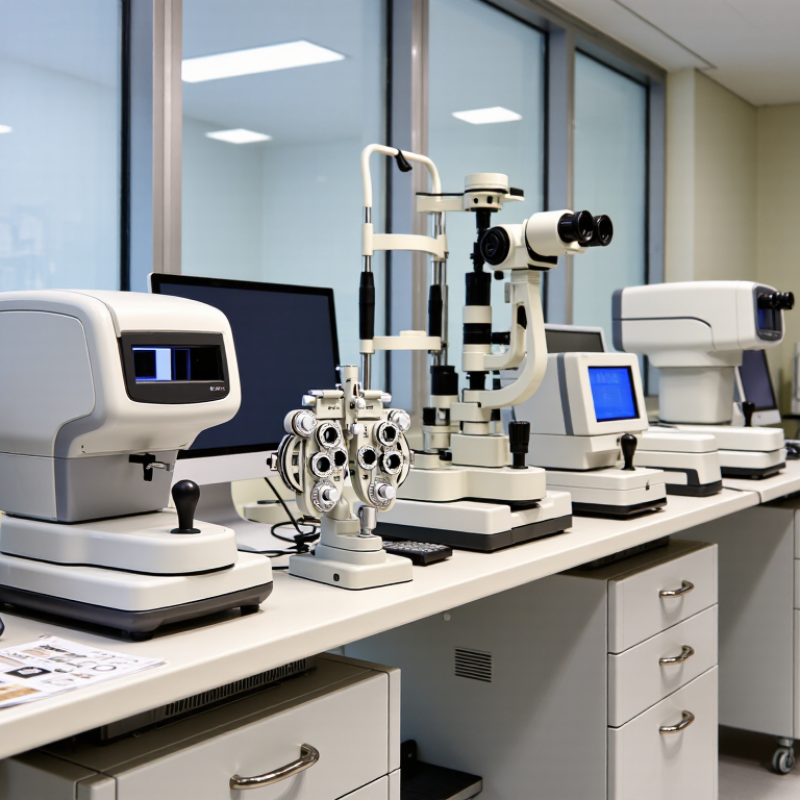
Understanding the Global Optometry Equipment Supplier Market
The global optometry equipment supplier market is broad, but its quality is uneven. Buyers compare more than catalog size or attractive pricing. A credible supplier should provide calibration records, product specifications, training materials, and responsive technical support. In practical purchasing work, these details reduce delays when a slit lamp, autorefractor, or lensmeter needs adjustment. The strongest candidates in a top-ten review usually show stable manufacturing controls and clear export documentation. That matters across borders.
Market selection also depends on local conditions. Clinics in humid regions may need sealed storage guidance and reliable voltage options. Teaching hospitals often require service contracts, spare parts, and user training. Smaller practices may value compact equipment and predictable maintenance costs. Ask how measurements are verified, how repairs are handled, and whether replacement parts remain available after purchase. Short answers are warning signs. So are vague warranty terms.
My own early comparisons focused too heavily on unit price. That was a mistake. A cheaper device can become expensive when installation is slow or calibration support is distant. Buyers should request sample certificates, references from comparable clinics, and a realistic delivery schedule. Independent technical review is useful, especially for diagnostic accuracy and software compatibility. No supplier is perfect. Even a well-documented quotation may hide training gaps or regional service limits. Careful buyers record these uncertainties before signing.
Top 10 Optometry Equipment Suppliers for Global Buyers - Understanding the Global Optometry Equipment Supplier Market
Anonymized market benchmark of supplier profiles commonly encountered in international optometry-equipment procurement. The comparison focuses on equipment scope, regulatory readiness, service capability, and typical purchasing considerations rather than company or brand names.
| Rank | Anonymous Supplier Profile | Primary Equipment Coverage | Typical Buyer Segments | Common Export Regions | Regulatory & Quality Evidence | Indicative Lead Time | After-Sales Support Model | Key Procurement Consideration |
|---|---|---|---|---|---|---|---|---|
| 1 | Profile A | Refraction units, examination chairs, slit lamps, keratometers, and visual acuity systems | Large optical chains, hospitals, teaching clinics, and public-sector projects | Europe, North America, the Middle East, and Southeast Asia | ISO 13485-based quality systems; conformity documentation for applicable medical-device markets; electrical safety test reports | 8–16 weeks for configured systems | Regional distributors, installation support, remote troubleshooting, and spare-parts programs | Confirm compatibility between chair units, diagnostic instruments, power specifications, and room layouts |
| 2 | Profile B | Optical coherence tomography, fundus imaging, retinal cameras, and ophthalmic imaging accessories | Ophthalmology hospitals, retinal centers, research institutions, and specialist practices | North America, Western Europe, East Asia, Australia, and Gulf markets | Market-specific medical-device registration, software documentation, cybersecurity controls, and image-quality validation | 10–20 weeks, depending on software and configuration | Application training, calibration support, software updates, and service contracts | Evaluate image resolution, data export formats, interoperability, and total software ownership cost |
| 3 | Profile C | Automated refractors, lensmeters, phoropters, chart projectors, and digital vision-testing systems | Independent optometry practices, optical retailers, mobile clinics, and primary-care centers | Latin America, Africa, South Asia, Southeast Asia, and Eastern Europe | Electrical safety certification, product technical files, user manuals, and local importer documentation | 4–10 weeks for standard configurations | Distributor-led installation, user training, warranty repair, and consumable replacement | Compare measurement repeatability, language support, calibration intervals, and local service coverage |
| 4 | Profile D | Contact and non-contact tonometers, pachymeters, visual field analyzers, and glaucoma-screening devices | Glaucoma clinics, hospitals, community screening programs, and specialist practices | North America, Europe, Australia, the Middle East, and developed Asian markets | Clinical performance documentation, calibration records, risk-management files, and applicable national registrations | 6–14 weeks | Preventive maintenance, calibration services, clinical application support, and replacement probes or accessories | Check measurement method, patient-safety features, calibration requirements, and consumable availability |
| 5 | Profile E | Trial lens sets, trial frames, retinoscopes, ophthalmoscopes, and manual refraction tools | Optometry schools, community clinics, low-resource facilities, and independent practices | Africa, South Asia, Latin America, Southeast Asia, and regional healthcare projects | Material specifications, basic optical performance documentation, packaging controls, and warranty terms | 2–8 weeks | Distributor support, replacement of defective components, user guides, and basic maintenance advice | Prioritize durability, optical accuracy, corrosion resistance, case protection, and replacement-part access |
| 6 | Profile F | Optical biometry systems, corneal topographers, aberrometers, and intraocular-lens calculation tools | Cataract centers, refractive-surgery clinics, eye hospitals, and surgical planning departments | Europe, North America, East Asia, Australia, and the Middle East | Clinical validation, software lifecycle records, data-security documentation, and medical-device registration evidence | 10–24 weeks | On-site commissioning, clinical workflow training, software support, and annual service agreements | Assess measurement repeatability, integration with electronic records, backup procedures, and software licensing |
| 7 | Profile G | Lens edging systems, patternless edgers, tracers, blockers, groovers, and optical workshop equipment | Optical laboratories, retail chains, wholesale workshops, and centralized finishing facilities | Europe, North America, China-region markets, Southeast Asia, and Latin America | Machinery safety documentation, electrical conformity records, operator instructions, and maintenance schedules | 8–18 weeks | Installation, operator training, preventive maintenance, tooling supply, and technical hotline support | Review throughput, lens-material compatibility, dust management, tooling costs, and technician response time |
| 8 | Profile H | Ophthalmic ultrasound, A-scan and B-scan systems, portable diagnostic devices, and screening kits | Mobile screening units, emergency departments, rural hospitals, and ophthalmic specialists | Africa, South Asia, the Middle East, Latin America, and remote regions worldwide | Battery and electrical safety documentation, cleaning instructions, transport validation, and local registration requirements | 5–12 weeks | Remote technical support, field-service partners, battery replacement, and portable-case maintenance | Consider portability, battery endurance, probe availability, environmental operating limits, and training needs |
| 9 | Profile I | Low-vision assessment devices, electronic magnifiers, illumination systems, and rehabilitation aids | Low-vision clinics, rehabilitation centers, schools, elder-care facilities, and nonprofit programs | North America, Europe, Australia, Japan, and selected emerging markets | Accessibility documentation, electrical safety records, software compliance information, and user-support materials | 3–10 weeks | Remote onboarding, accessibility training, repair exchange programs, and user education materials | Compare usability, display quality, accessibility features, language options, and patient training resources |
| 10 | Profile J | Clinic furniture, instrument stands, sterilization accessories, examination-room lighting, and supporting devices | New clinic projects, hospital renovations, procurement contractors, and multi-site practices | Europe, the Middle East, Africa, Southeast Asia, and Latin America | Material safety information, electrical compliance, load specifications, cleaning compatibility, and installation drawings | 4–14 weeks | Project coordination, site measurement, installation, replacement parts, and facility-maintenance guidance | Verify room dimensions, ergonomic requirements, infection-control procedures, warranty scope, and delivery conditions |
Note: Lead times are indicative international procurement ranges and may vary according to configuration, regulatory clearance, customization, shipping method, installation requirements, and destination-country import procedures. Regulatory evidence should always be verified against the buyer’s local medical-device requirements.
Related Posts
-
What Is the Best Optometry Equipment to Buy in 2026?
-

7 Essential Tips for Choosing the Right Optometry Equipment
-

How to Choose the Right Optometry Equipment for Your Practice Success
-
What is Ophthalmic Equipment and How is it Used?
-
Top Optometry Equipment for Global Buyers in 2026?
-

What is Kraft Paper Bag and Why Choose It for Packaging?